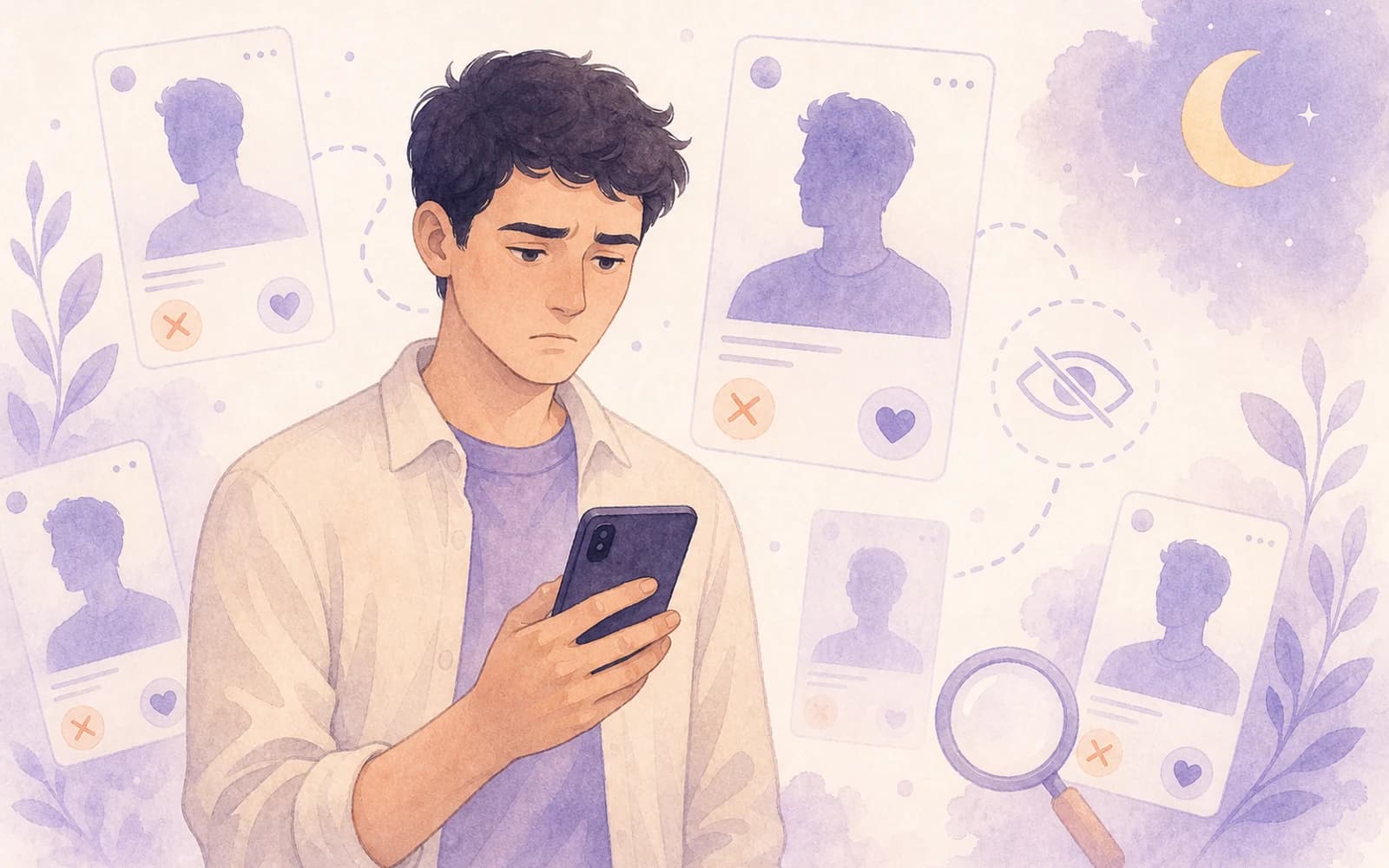
The notifications had dwindled to nothing. Weeks of excited replies had slowed to single digits, then to nothing. You refined your photos endlessly, the lighting, the poses, the filters. You rewrote your bio a dozen times, studied the "dating experts," started working out more, upgraded your wardrobe. But the matches keep coming from the same demographic: bots, scammers, and women desperate enough to respond despite feeling no attraction.
It wasn't always this way. Before dating apps became this soul-crushing numbers game, meeting people felt possible. You remember the nights out with friends, the chance encounters at parties, the natural flow of conversation that led to connection. Now it feels like shouting into an algorithmic void where your existence barely registers.
The Invisible Men Blueprint: System Not Individuals
The invisible men problem isn't a personal failure, it's a systemic design flaw built into how modern dating apps function. While dating apps promised to democratize romance and "connect everyone," what they actually created was a brutal meritocracy where visibility depends on factors you can't control.
- High-status profiles get seen by more people
- More exposure leads to more matches and conversations
- More activity signals "quality" to the algorithm
- Algorithm amplifies visibility of these profiles further
Why Most Guys Fade Into Irrelevance (The Psychology Behind Invisibility)
Beneath the algorithmic surface lies a deeper psychological reality: modern dating apps have transformed male-female attraction into a marketplace where 80% of men compete for scraps, while 20% dominate the field. This isn't gender bias, it's evolutionary psychology playing out in digital form.
- Average men face 90-95% rejection rates on cold approaches
- The "halo effect" of app algorithms creates visibility bias
- Serial rejection creates compounded psychological barriers
- Traditional masculine confidence erodes under relentless digital competition
Modern Dating's Invisible Hierarchy
The invisible men problem has fundamentally reshaped how modern men experience romance, creating new relationship categories while eliminating traditional pathways to connection.
| Category | Characteristics | Common Outcome |
|---|---|---|
| Alpha Dominators | Elite profiles getting 20-50 matches weekly | Multiple dating options, relationship abundance |
| Invisible Majority | Most men, match rates less than 2% | Prolonged singlehood, reduced confidence |
| Fortunate Few | Men who succeed despite system odds | Successful long-term relationships |
| System Optimizers | Those who "hack" the system | Short-term success, often unsustainable |
- Moderately attractive men become completely invisible to women at their level
- High-quality women rarely see high-quality men in their compatibility zone
- Geographic limitations compound status-based restrictions
- Age biases amplify algorithmic segregation
In this hierarchy, emotional investment often comes before actual connection. Status signaling replaces genuine interaction, deferred risk management delays important conversations, and over-reliance on visual assessment biases decision-making.
Breaking Free: Building Authentic Connection Beyond the Algorithm
The invisible men problem offers a gift in disguise: it reveals the limitations of digital dating and points the way toward more sustainable relationship formation.
Ironically, the very system that creates invisibility also teaches what real connection requires: moving beyond performative profile optimization toward genuine self-development and relational skills.
Seeing Through the Illusion: Modern Love's Real Value
The tragedy of invisible men isn't personal inadequacy, it's institutional fraud. Dating apps sell the illusion of connection while perpetuating isolation. Real value, the kind that sustains and elevates, has never been about mass-market visibility. It's about the quiet resonance between two people who see each other's authentic humanity.
Your value as a person isn't measured in matches, but in the rare willingness to be seen when the shine fades and reality emerges. The only love worth building is the kind that reflects your real self back to yourself.