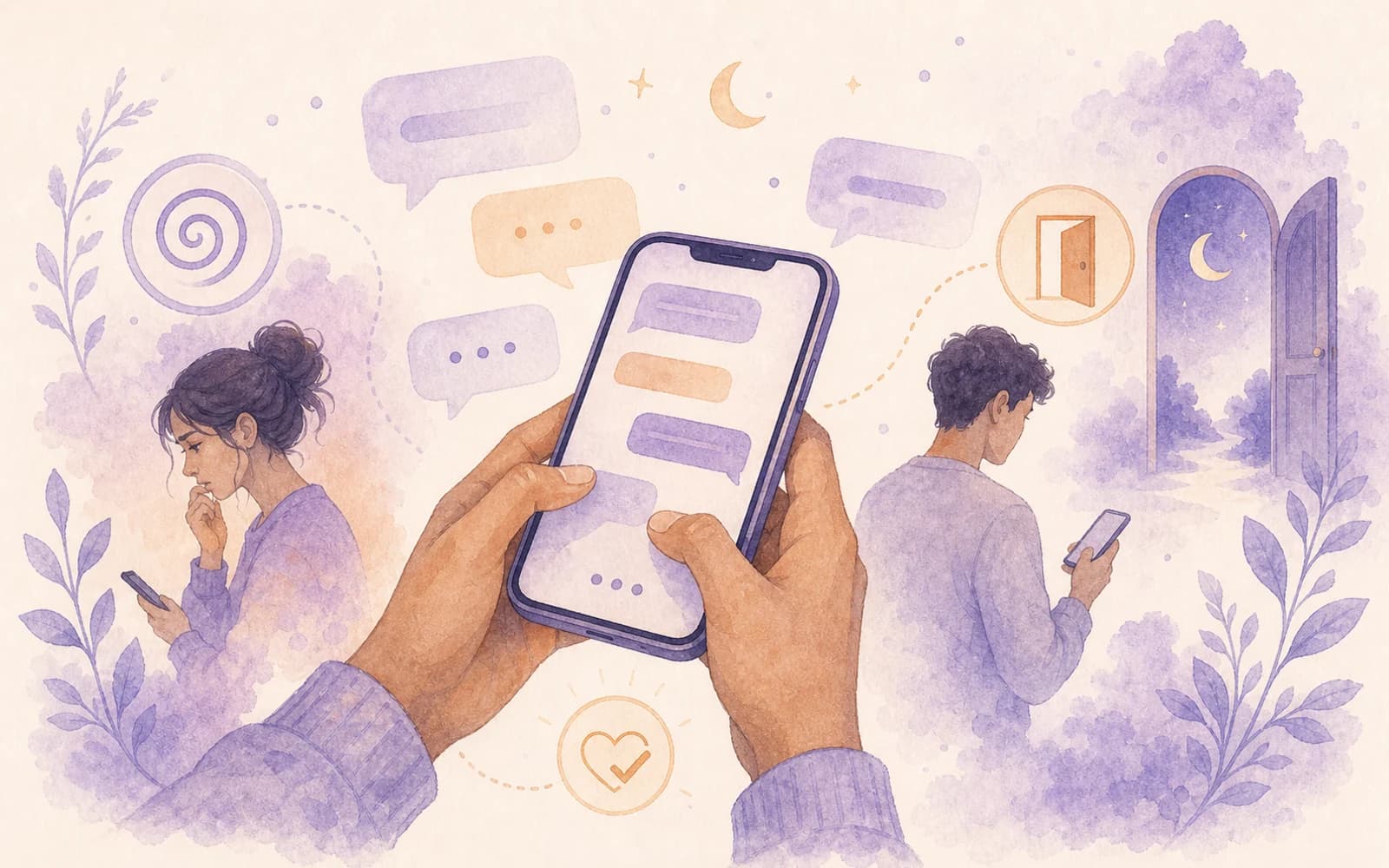
It's happening again. Your partner seems distant tonight, maybe they were quiet at dinner, maybe they didn't kiss you quite as long as usual. Your mind starts its familiar spiral: Are they pulling away? Did I do something wrong? Are they losing interest? By bedtime, you've analyzed every interaction from the past week, searching for clues about what went wrong.
You know you're being irrational. Your partner hasn't actually done anything concerning. But your nervous system doesn't care about logic, it's screaming danger signals, flooding your body with anxiety chemicals, preparing for the heartbreak it's convinced is coming.
Spot the Self-Sabotage Cycle
Relationship anxiety is sneaky. It disguises itself as love and protection, but its actual impact is destructive. Before you can heal it, you need to recognize how it shows up in your relationships, and how it creates the very outcomes you're trying to prevent.
- Constant reassurance-seeking, "Do you still love me?" asked multiple times per day
- Testing behaviors, not texting back to see reactions, picking fights to gauge commitment
- Mind-reading expectations, getting upset when they don't intuitively know what you need
- Jealousy spirals, obsessing over their interactions with others, especially on social media
It can also show up as people-pleasing to prevent abandonment, emotional volatility around minor relationship stress, and hypervigilance where every text, tone, and facial expression becomes evidence to analyze.
Soothe Your Anxious Triggers (Without Leaning on Your Partner)
The key to healing relationship anxiety isn't getting your partner to provide constant reassurance, it's learning to calm your nervous system independently. Your partner can support your healing, but they can't be responsible for managing your emotional state.
When relationship anxiety hits, your body activates the same fight-flight-freeze response designed to help you escape tigers. Your heart races, your thoughts become catastrophic, and you feel compelled to take immediate action to restore safety. But your partner isn't a tiger, and most relationship "threats" aren't actually dangerous, they're just triggering old wounds.
Communicate Your Anxiety Without Overwhelming Your Partner
One of the biggest mistakes anxiously attached people make is either hiding their feelings completely (and expecting their partner to be mind-readers) or dumping all their anxiety onto their partner (making them responsible for constant emotional management). The healthy middle ground is vulnerable, honest communication that doesn't make your partner responsible for fixing your feelings.
Instead of making your partner defensive with accusations, own your emotional experience:
- "I felt scared when..." (not "You made me scared when...")
- "I need reassurance that..." (not "You never reassure me...")
- "I'm struggling with..." (not "You're making me struggle...")
Practice Secure Behaviors (Even When You Don't Feel Secure)
One of the most powerful ways to heal relationship anxiety is to practice behaving like a securely attached person, even when you don't feel secure inside. Your actions can actually rewire your neural pathways over time, creating new patterns of thinking and feeling.
- Give the benefit of the doubt. When your partner is late or distracted, choose the most generous interpretation. Practice this daily with small things, an unanswered text, a tired mood, a changed plan.
- Maintain your own life. Keep friendships, hobbies, and personal goals. Your independence makes the relationship healthier and your anxiety quieter.
- Communicate directly instead of testing. Replace "I'll go quiet and see if they chase me" with "I'm feeling disconnected, can we spend time together this weekend?"
- Tolerate normal fluctuations. One quiet evening doesn't mean the relationship is falling apart. Give space and reconnect tomorrow.
Loving Without Fear
Relationship anxiety wants to convince you that love is dangerous, that hypervigilance keeps you safe. But the opposite is true: anxiety is what makes love dangerous. It turns connection into threat, intimacy into vulnerability, partnership into a constant test of worthiness.
When you learn to soothe your nervous system, communicate your needs directly, and build security from within, something beautiful happens: you stop needing your partner to be perfect, and you start appreciating them for who they are. You stop fearing abandonment because you know you can handle whatever comes.