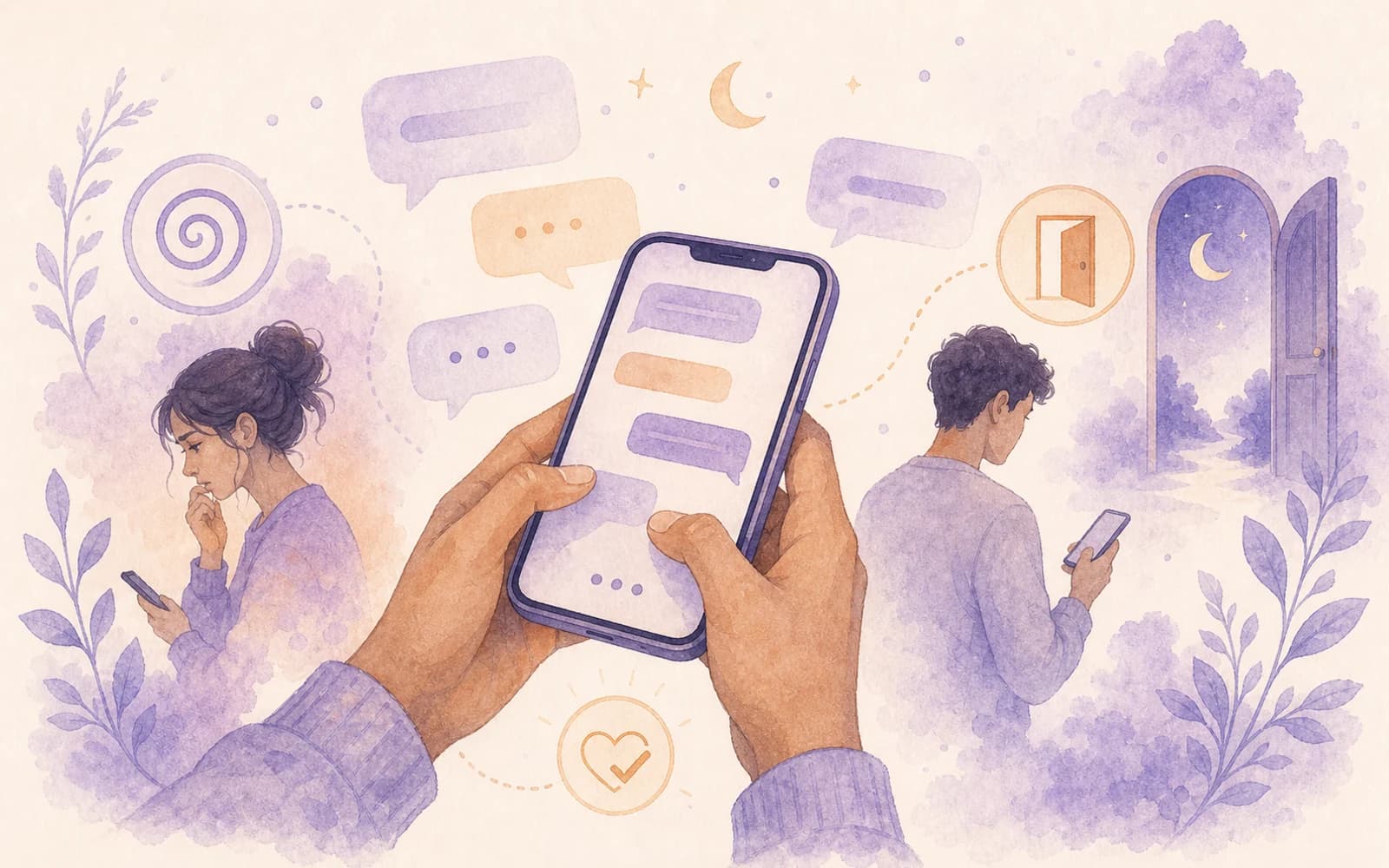
Your partner's phone buzzes during dinner. You glance over and see a notification from someone whose name you don't recognize, with a winky face emoji. They quickly flip the phone face-down and continue eating as if nothing happened. Your stomach tightens. It's probably nothing, you tell yourself. But that seed of doubt has been planted.
Later, you're scrolling through their Instagram and notice they've been consistently liking photos of the same attractive coworker, not just professional headshots, but bikini vacation pics too. Still not cheating, technically. But it doesn't feel innocent either.
Micro-Cheating 101: The Gray Area of Modern Infidelity
Micro-cheating isn't about dramatic affairs or obvious betrayals. It lives in the shadows, in the DMs you wouldn't show your partner, the emotional connections that feel slightly too intimate, the small deceptions that you rationalize as "no big deal."
Psychologist Stacey Thiry defines micro-cheating as "non-sexual yet flirtatious behavior with someone outside your relationship", actions that might technically seem trivial but violate the spirit of trust and commitment in your partnership.
What Does Count as Micro-Cheating?
The beauty and curse of micro-cheating is that it's highly contextual, what counts depends on your relationship's unique boundaries. However, certain behaviors consistently cross into problematic territory across most partnerships.
| Behavior | Micro-Cheating Indicator |
|---|---|
| Liking a friend's vacation photo | Not micro-cheating (unless pattern of targeting attractive people) |
| Consistently being first to like attractive coworker's photos | Likely micro-cheating |
| Grabbing lunch with platonic friend | Not micro-cheating (if transparent) |
| Meeting ex for coffee without mentioning it | Definitely micro-cheating |
| Complimenting someone's new haircut | Not micro-cheating |
| DMing "You look incredible" to someone you find attractive | Micro-cheating |
What Usually Doesn't Count (Setting Reasonable Boundaries)
Not every outside interaction constitutes betrayal. Healthy relationships require trust, and trust requires giving partners the benefit of the doubt in genuinely innocent situations.
- Transparency, Your partner knows about and is comfortable with these interactions
- Boundaries, The interactions maintain appropriate limits for your relationship status
- Reciprocity, You apply the same standards to your behavior that you'd want your partner to follow
- Intent, There's no hidden agenda or romantic/sexual motivation
Why Micro-Cheating Hurts (The Erosion of Trust)
The pain of micro-cheating often surprises people with its intensity. Partners might think, "Why are they so upset? I didn't actually cheat." But research shows that micro-cheating can be deeply wounding precisely because it's so easy to minimize and gaslight.
- Hypervigilance, constantly monitoring their partner's digital behavior
- Self-doubt, wondering if they're "crazy" or "overreacting"
- Insecurity, questioning their own attractiveness and desirability
- Paranoia, imagining worse betrayals that might be hidden
Over time, that uncertainty becomes emotional exhaustion: constantly wondering what is really going on.
- Boundary testing, small violations to see what you can get away with
- Normalization, these violations start feeling normal and acceptable
- Escalation, pushing boundaries further as previous violations lose their thrill
- Justification, rationalizing increasingly problematic behavior
- Full betrayal, physical or emotional affairs that feel "inevitable"
Preventing and Addressing Micro-Cheating
The best approach to micro-cheating is prevention through clear communication and mutual respect. However, when boundaries have been crossed, healing is possible through transparency, accountability, and renewed commitment to relationship health.
Sit down together and explicitly discuss digital boundaries: social media interaction limits, policies around exes, transparency expectations, guidelines for work relationships, and what information should be shared about outside interactions.
Mindful Modern Love
In our hyper-connected world, the opportunities for micro-cheating have multiplied exponentially. What once required deliberate effort now happens with a few taps on a phone screen. The ease of digital connection has made it both easier to betray trust and easier to rationalize that betrayal as meaningless.
But here's what the most successful modern couples understand: loyalty isn't just about avoiding the big betrayals. It's a daily practice of small choices that honor your relationship, unfollowing accounts that make your partner uncomfortable, mentioning interactions that might seem insignificant but would matter to them, choosing transparency over secrecy when the two conflict.